
Retro Gaming's Second Life
THE EXPLOSION OF GAME BOY MODDING, FPGA CONSOLES, AND NOSTALGIA-DRIVEN HARDWARE THAT'S REDEFINING HOW WE PLAY.
Walk into any retro gaming convention and you'll see them: pristine Game Boy Advances with IPS screens brighter than anything Nintendo imagined. Custom shells in transparent atomic purple. USB-C rechargeable batteries. Speakers that don't crackle. These aren't relics—they're rebuilt.
The Game Boy modding scene has transformed from a niche hobby into a global micro-industry. Drop-in IPS screen kits, laminated displays, aluminum shells, clicky button upgrades—entire supply chains now exist to modernize 30-year-old hardware. For many players, the original console is just the starting point.
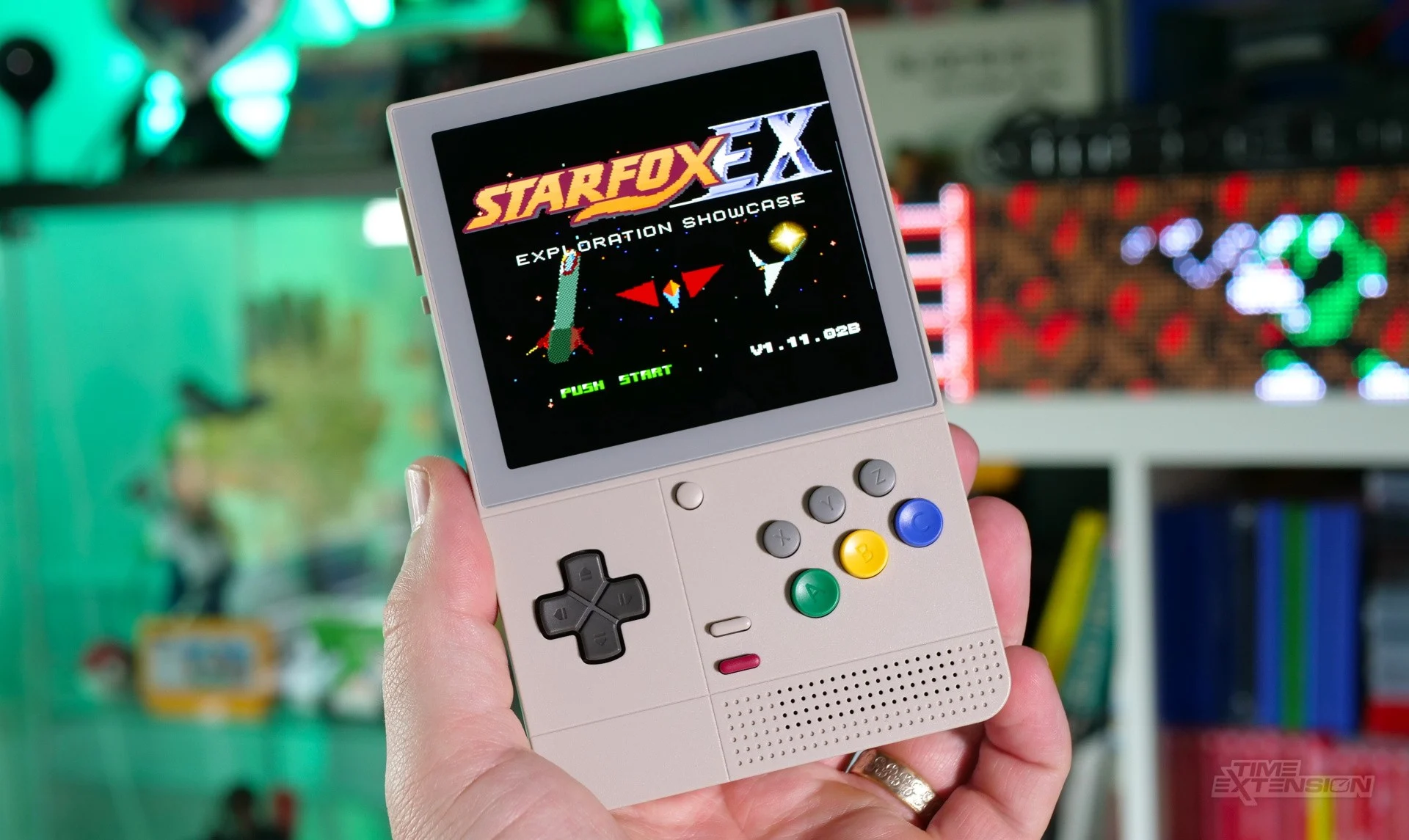
But original hardware is only one path. A parallel ecosystem has emerged around dedicated retro handhelds—devices like the Retroid Pocket, Anbernic's RG series, and the Miyoo Mini. They look like artifacts from 1998 but run Linux or Android under the hood, capable of emulating dozens of systems in a single pocketable device.
These machines aren't trying to compete with PlayStation 5. They're competing with memory. Vertical form factors. Clicky D-pads. 4:3 screens tuned for pixel art. Entire companies now exist to manufacture nostalgia at scale—and they're thriving.
Then there's FPGA. Projects like MiSTer don't emulate consoles in software—they recreate them at the hardware level. Instead of simulating a Super Nintendo, they replicate its logic gates. The difference is subtle to casual players but profound to purists: near-zero latency, cycle-accurate behavior, and compatibility that software emulation still struggles to match.
Flash cartridges have also reshaped the landscape. EverDrives and similar carts allow players to load entire libraries onto original consoles, preserving aging discs and cartridges while keeping the authentic hardware experience intact. Preservation and convenience no longer have to compete.
Display technology has become its own obsession. CRT televisions—once left on sidewalks for free—now command hundreds of dollars. Sony Trinitrons and PVM monitors are hunted like rare sneakers. For those without space, HDMI upscalers and scanline shaders replicate the analog glow on modern OLED panels. Entire YouTube channels are dedicated to the science of pixel perfection.
“Modern gaming gives you everything. Retro gaming makes you earn it.
"I drove three hours for a 27-inch Trinitron," says Alex Rivera, 29, who grew up playing on emulators. "When I saw Sonic running on real hardware, on glass, with scanlines—I finally understood what people meant by 'this is how it was meant to look.'"
Online communities have amplified the movement. Reddit forums, Discord servers, and TikTok accounts dedicated to mod builds and handheld reviews rack up millions of views. What used to be solitary hobbyism is now algorithmically accelerated culture.
The appeal isn't purely visual. It's philosophical. Modern games optimize for engagement loops—battle passes, daily challenges, live-service roadmaps. A cartridge doesn't ask for your login streak. It boots instantly. It ends when you turn it off.
This isn't just nostalgia. Many of today's retro enthusiasts were born after the Nintendo 64 launched. They're not reclaiming childhood—they're choosing constraint in a world of abundance.
And the market reflects it. GameCube and PlayStation 2 titles once found in bargain bins now fetch premium prices. Limited-run reprints sell out instantly. Boutique accessory makers—aluminum shells, custom PCBs, replacement lenses—operate like streetwear brands.
Retro gaming is no longer about preserving the past. It's about remixing it—modern screens inside old shells, open-source firmware on new devices, hardware recreation instead of software simulation. The past has been upgraded, optimized, and re-released.
In an era of infinite updates and cloud saves, there's something radical about blowing dust out of a cartridge slot—or loading 10,000 ROMs onto a device that looks like it came from 1999.
Modern gaming gives you everything. Retro gaming makes you choose.